
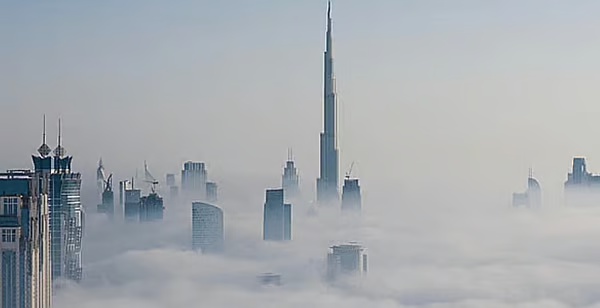

In late January 2026, unusually chilly weather swept across the United Arab Emirates — a nation better known for its desert heat and sunshine than for cold, wintry conditions. Residents of Dubai, Abu Dhabi, Ras Al Khaimah and other emirates felt a noticeable drop in temperatures, with some mountain regions plunging near-freezing levels. This prompted questions not just locally, but regionally: What’s causing the cold wave? How does it fit into larger weather patterns across the world? And what can we expect in the days ahead?
To unpack this complex picture, the Khaleej Times spoke with Dr. Mohamed Al Ebri, Director of Meteorology at the National Centre of Meteorology (NCM) in the UAE. His insights help us understand not only the mechanics of the current cold spell but also how such events relate to broader climate and atmospheric systems.
A Rare Cold Snap in the UAE: What’s Happening?
In January 2026, temperatures across the UAE — particularly at higher elevations like Jebel Jais in Ras Al Khaimah — dipped to levels rarely seen in recent years. On January 22, temperatures dropped to around 0.2°C at Jebel Jais, making it one of the coldest days of this winter season.
These readings contrast sharply with the region’s typical winter conditions, where average low temperatures remain well above freezing except at mountain peaks. Even more surprising to many residents was the early morning chill that carried into cities and low-lying areas, prompting social media chatter and questions about whether this cold wave was “normal” for the UAE’s winter.
What’s Driving the Cold Wave?
According to Dr. Al Ebri, the recent cold snap wasn’t just a local quirk — it was the result of specific atmospheric patterns interacting over the Middle East:
1. Cold Air Mass Intrusion
A significant mass of cool air swept down from higher latitudes into the Arabian Gulf region, driven by shifts in the jet stream and upper-level pressure systems. When these cold air masses travel southward, they can displace warmer surface air and cause significant drops in temperature — even in regions that rarely see frost.
2. Clear Skies at Night and Radiative Cooling
Clear night skies — common in winter months — allow heat to escape rapidly into space. This radiative cooling effect is particularly strong in desert and dry coastal environments like the UAE. On clear nights, when winds are light, temperatures can plummet rapidly after sunset, especially in elevated areas.
3. Seasonal Atmospheric Patterns
The UAE and Gulf region are influenced by larger seasonal phenomena. During winter, Siberian high-pressure systems can push cold air masses westward toward the Middle East, while northerly winds draw down cooler air from Central Asia. These patterns align with what meteorologists observe in typical mid-winter weather flows.
Taken together, these factors explain why temperatures in parts of the UAE fell well below seasonal norms — and why this cold spell felt particularly intense to residents.
The Forecast: What Comes Next?
Dr. Al Ebri says the cold conditions are likely to linger for a few more days — especially through overnight hours — before gradually giving way to a slight warming trend. Around January 25, there’s even a chance of light rainfall in northern and eastern areas as weather systems shift.
This pattern of alternating cold snaps and milder intervals is typical of many winter seasons. The UAE may see short bursts of colder nights interspersed with milder days, especially over the coming weeks — a reminder that winter in the region is not simply a period of steady cold, but a series of weather fluctuations.
How This Fits Into Broader Weather Systems
Although the UAE’s cold wave feels like a local event, it’s part of larger atmospheric dynamics that affect many regions of the world — especially during winter. Cold spells like this can be influenced by:
• Jet Stream Shifts
The jet stream — a fast-moving band of wind high in Earth’s atmosphere — strongly influences weather patterns across the Northern Hemisphere. When it dips southward, it can usher in cold arctic air to regions far from the poles.
• Oscillations Like the Arctic Oscillation (AO)
The Arctic Oscillation and related climate indices reflect pressure differences between the Arctic and mid-latitudes. When the AO enters a “negative phase,” cold Arctic air tends to push farther south, increasing the chances of cold waves in Europe, Asia and even the Middle East.
• El Niño/La Niña and Global Climate Patterns
Larger patterns such as La Niña or El Niño (phases of Pacific Ocean temperature anomalies) can influence winter weather globally. For example, La Niña conditions are sometimes associated with cooler winters in parts of Asia and North America. While these effects are indirect, they illustrate how connected global weather systems truly are.
In the case of the current UAE cold spell, local atmospheric shifts and pressure patterns were the dominant drivers — but these were superimposed against a backdrop of broader climate variability that affects weather worldwide.
Cold Waves Beyond the UAE: Regional Impacts
This recent cold surge was not limited to the UAE. Across the Arabian Gulf and Middle East, similar patterns emerged:
- Saudi Arabia experienced temperatures plunging below freezing in several northern regions — with some areas like Turaif recording lows around -3°C.
- In parts of Saudi Arabia, the cold was so intense that standing water froze mid-air, creating ice in places where such phenomena are extremely rare.
These regional drops underscore how far south cold air masses can occasionally travel when atmospheric conditions align.
Context: Climate Change and Weather Extremes
Cold topography in typically warm regions often captures public attention — but meteorologists stress that short-term cold events like this are not direct evidence of global cooling.
In fact, long-term climate trends driven by global warming show a rise in average temperatures, even as extreme weather events — including occasional cold snaps — can still occur. Extreme heat waves, floods, and shifts in weather patterns are all part of a changing climate system. For example, the UAE has previously recorded record high temperatures above 50°C, and major flooding events have also occurred in recent years — both consistent with global patterns of climate variability.
Put simply: a cold snap doesn’t negate warming trends, but it does highlight how dynamic Earth’s atmosphere can be.
Tips for Residents During Cold Spells
If you’re in the UAE or similar regions during a cold snap, here are some practical tips:
- Dress in Layers: Nights can be much colder than days, especially in open or higher-altitude areas.
- Check Weather Alerts: The NCM regularly updates forecasts and weather advisories.
- Watch for Fog: Cooler temperatures can also bring fog, which affects visibility — especially in coastal and inland areas.
- Protect Sensitive Plants and Animals: Sudden cold can stress flora and fauna not adapted to freezing conditions.
- Be Prepared for Rain: Cold fronts can be accompanied by light rain or increased cloudiness, especially near the coast.
Final Thoughts
The January 2026 cold wave across the UAE was a striking weather event — not just because of the temperature drop, but because it reminded residents and observers of the complex interplay between local weather, regional atmospheric patterns, and global climate dynamics. While rare in some respects, such cold spells are part of the natural variability of weather, shaped by powerful forces that ripple across continents.



Leave a Reply