
Dubai’s real estate market delivered a historic performance in 2025, marking the strongest year on record as the emirate transitions from rapid expansion to mature, sustainable growth. Whether you’re an investor, industry professional, policymaker, or property enthusiast, the numbers and trends from last year illustrate a market not only breaking records, but also redefining long-term value and confidence.
A Record-Breaking Year: Transactions, Value, and Growth
According to official data released by the Dubai Land Department (DLD), Dubai’s property sector recorded over 270,000 real estate transactions worth AED 917 billion (approx. $249.7 billion) in 2025 — representing a 20 % year-on-year increase in both transaction volume and total value. This landmark performance not only eclipsed the previous highs, but also firmly positioned 2025 as the strongest year ever for Dubai real estate.
These figures include a wide range of activity — from property sales and off-plan deals to leases and real-estate-related services — culminating in 3.11 million total real estate interactions, up 7 % from 2024.
This breadth of activity shows that Dubai’s market is not concentrated in a single segment; rather, it reflects diverse demand across residential, commercial, and land sectors, supported by demographic growth and economic resilience.
Demand Profile: Apartments, Villas, and New Investors
Residential transactions continued to lead the market, and notably, apartments accounted for about 83 % of total deals, with apartment sales reaching 167,841 transactions and values rising significantly year-on-year.
At the same time, villa prices and transactions also showed robust growth. Independent research indicates villa values have increased significantly since the pandemic, with some segments outperforming their previous peak by a wide margin, reflecting strong fundamentals and demand for spacious, high-quality homes.
Investor participation expanded alongside these residential trends. In 2025, the investor base grew to around 193,100 participants, a 24 % increase, including 129,600 new investors — showing that Dubai’s property sector continues to attract fresh and repeat capital from around the world.
Structural Drivers: Population Growth and End-User Demand
One of the most significant shifts in the market’s DNA has been the transition from speculative trading toward real, end-user demand. Dubai crossed the 4 million population mark in 2025, and strong inward migration — both for employment and lifestyle — has translated into stable housing needs rather than short-term speculation.
This is evident in the fact that buyer demographics skew heavily toward individuals and families aged 31-45, indicating a trend toward settlement, family dwellings, and long-term occupancy, rather than merely financial transactions.
Investors and analysts alike have noted that the rise of end-user buyers — especially in one- to three-bedroom apartments and family-oriented villas — is a hallmark of a market maturing into sustainable demand, rather than cyclical price swings.
Market Maturity: Regulation, Transparency, and Sustainability
Stakeholders highlight regulatory clarity and transparency as fundamental to Dubai’s success. Government strategies such as the Dubai Economic Agenda (D33) and the Dubai Real Estate Sector Strategy 2033 emphasize long-term economic resilience, governance, and data-driven policymaking.
Rather than chasing short-term growth, Dubai’s real estate framework now disciplines speculative activity, aligning supply with genuine demand while ensuring balanced delivery of housing stock and a focus on quality and infrastructure.
Omar Hamad Bu Shehab, Director General of the Dubai Land Department, noted that the sector’s performance reflects a more mature and sustainable market, anchored in legal certainty, digital transformation, and collaborative planning with developers and brokers.
Inclusion and Diversity: Women Investors and New Participation
An important social dimension of this record year is the notable increase in participation by women investors, who collectively invested AED 154 billion through more than 76,700 deals — a 31 % growth in value and 24 % in transaction count.
This trend not only reflects larger inclusion in the property market but also underscores Dubai’s appeal as a global city where diverse investor segments find confidence and opportunity.
Hotspots and Investment Zones
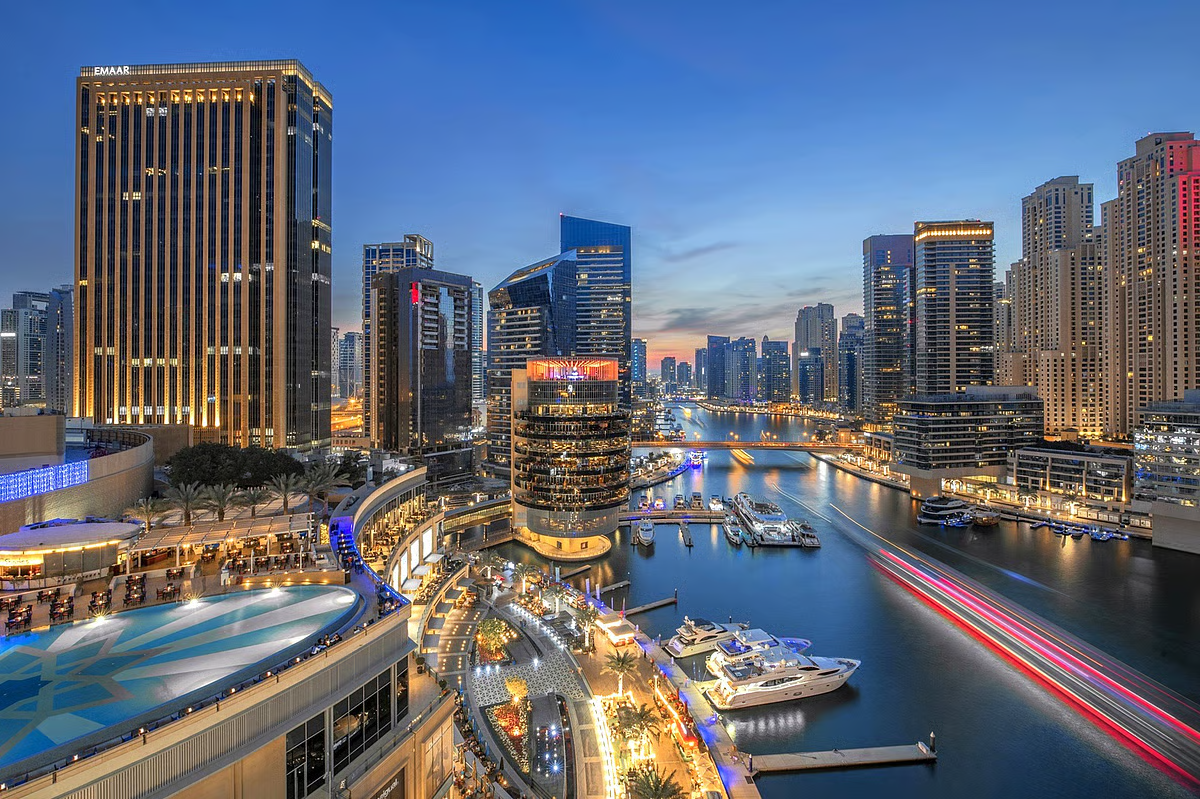
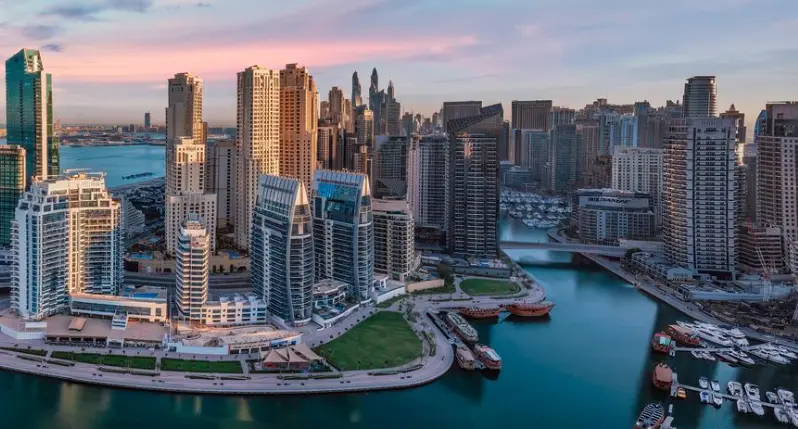
Several neighborhoods and districts emerged as activity leaders in 2025. Areas like Business Bay, Dubai Marina, Al Barsha South Fourth, Palm Jumeirah, and Dubai Airport City topped the charts in transaction volumes and values — each offering unique draws from luxury living and waterfront access to strong rental markets.
Mortgage activity also shifted toward premium areas, with Palm Jumeirah, Dubai Marina, and Business Bay among the top zones for financed transactions — indicating not only investor interest, but also broader access to homeownership via credit.
Commercial and Land Segments: Broader Strength
While residential demand drove the headline figures, commercial real estate and land transactions also play a growing role in Dubai’s broader property ecosystem. Sustained infrastructure expansion, business growth, and foreign company relocations support office and industrial space demand — adding resilience to the market beyond housing alone.
Land transactions, particularly in emerging communities and strategic developments, have also seen upticks as investors position themselves for future urban expansion and long-term value creation.
Outlook: Sustainability and Future Trends
Looking ahead into 2026 and beyond, multiple signals point toward continued momentum. Early data from the first weeks of 2026 indicate strong transaction values and investor confidence, building on the breakout success of 2025.
Analysts suggest that controlled supply growth, demographic expansion, and lifestyle prioritization will sustain demand — potentially continuing the transition toward greater long-term occupancy, community-centric development, and diversified investment profiles.
Accessible policies like the First-Time Home Buyer Programme, strategic voter incentives, and Dubai’s tax-free environment further anchor Dubai’s market as an appealing destination not just for short-term gains, but for multi-generational property investment and residence.
Conclusion: A New Chapter for Dubai Real Estate
Dubai’s 2025 real estate performance is not merely a record in terms of numbers — it is emblematic of a market evolving into maturity, driven by stable demand, policy foresight, and global confidence.
As the emirate continues to develop its economic and urban fabric, real estate remains a core pillar of both domestic prosperity and international investment appeal. From towering skyscrapers to family communities and innovative developments, Dubai’s property landscape is defining a new era of sustainable, inclusive, and resilient growth.

Leave a Reply