

Dubai-based real-estate developer and service provider Deyaar has posted a sharp year-on-year increase in profit after tax of 23.7 % for the nine-month period to 30 September 2025, reaching AED 406.4 million (up from AED 328.5 million in the same period last year). This performance reflects not only strong underlying demand in Dubai’s property market but also Deyaar’s specific strategic moves, project execution and growing asset base.
Key financial highlights
Some of the standout numbers from Deyaar’s YTD September 2025 performance:
- Total revenue surged 39.1 % to AED 1,447 million (versus AED 1,040.5 million a year ago).
- Revenue from the core property-development segment grew 46.4 % to AED 1,196 million.
- Revenue from “other business segments” (which include property management, facilities services etc) grew by 12.2 % to AED 251 million.
- Earnings per share (EPS) rose to 9.33 fils from 7.51 fils, an increase of ~24.2%.
- Total assets rose by 12.3% to AED 7,591 million.
These numbers show both strong top-line growth and improving operational scale and efficiency.
What’s driving the surge?
1. Strong property development revenue
The biggest driver by far is Deyaar’s property development business segment – up 46.4%. That jump is huge. It shows the company is successfully launching, selling and/or handing over projects at a scale and pace that translates into revenue. In a sector like real-estate development, revenue recognition often depends on handovers, milestone completions, and such, so this suggests Deyaar is executing.
2. Diversified income streams growing
While the development side is the main driver, the “other businesses” line also grew (12.2%), which helps reduce dependence on a single project type and adds stability.
3. Supportive macro and market environment
Deyaar’s CEO, Saeed Mohammed Al Qatami, pointed out that the broader fundamentals of Dubai’s property market remain strong, bolstered by strategic government initiatives such as the Dubai Economic Agenda D33 and the Dubai 2040 Urban Master Plan. The fact that Deyaar is benefiting from favourable macro tailwinds — investor interest, foreign capital, infrastructure growth, population inflow — is a plus.
4. Project launches and pipeline momentum
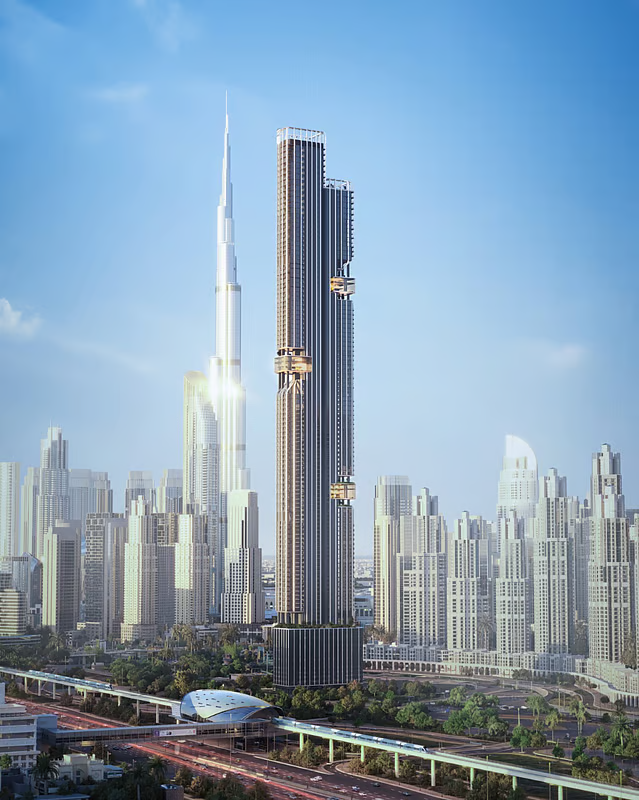
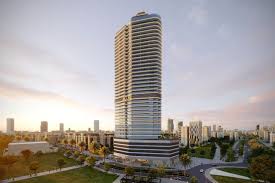
Some specific projects get highlighted: the launch of the ultra-luxury 445-metre high-rise “Downtown Residences”, the final phase of the “Park Five” community in Dubai Production City, and the debut in the Northern Emirates with “AYA Beachfront Residences” in Umm Al Quwain. These launches suggest Deyaar is moving into premium segments as well as keeping a diversified geographic spread — which can boost margins and enhance brand strength.
What does this mean for stakeholders?
Investors: The strong profit and revenue growth, combined with rising EPS and asset base, send a favourable signal. They may view Deyaar as a developer with improving scale, execution reliability and growth prospects.
Buyers / end-users: For prospective homeowners or investors in Deyaar properties, the performance suggests the company is financially healthy, delivering projects and revenue, which in theory reduces project-delivery risk.
Market watchers / sector analysts: The result is evidence of the strength in Dubai’s real-estate development sector, particularly for developers who can execute. It underscores that the development side of business (versus purely secondary-market trading) is still a growth engine.
Company itself: With stronger cashflows/revenue base, Deyaar is in a stronger position to invest in landbank, new projects, possibly expand into new segments or geographies.
Risks and things to keep an eye on
While the performance is strong, some caution points are worth noting:
- Cycle sensitivity: Real-estate development is cyclical. While Dubai is booming now, broader macro conditions (interest rates, global economy, regulatory/visa/tourism factors) could cause headwinds.
- Execution risk: For the revenue growth to translate into sustainable profit, Deyaar must continue to deliver its projects on time, within budget, and maintain demand. Delays or cost overruns could erode margins.
- Segment / location risk: As the company enters ultra-luxury high-rise segments (e.g., 445m tower) and new geographies (Umm Al Quwain), the risk profile changes. These may carry higher costs, longer cycles, and competition.
- Margin pressure: While revenue is booming, margins in development can be squeezed by increasing labour/material costs, regulatory costs, financing costs.
- Dependence on market sentiment: Dubai’s real-estate market has been buoyant; if sentiment or foreign investment flows slow, that could impact demand and pricing.
Strategic outlook: What comes next?
Based on the commentary from Deyaar, several focal points for the remainder of 2025 and beyond emerge:
- The company is focused on selectively launching new projects that meet evolving customer needs — rather than just chasing volume.
- Deyaar aims to deliver around 2,000 residential units this year, signalling a busy handover pipeline which will continue revenue recognition.
- The handover of key projects like “Amalia” in Al Furjan and “Regalia” in Business Bay are underway, which will translate into recognition.
- The company will likely benefit from strategic landbank acquisitions and asset enhancement given its growing asset base (12.3% growth) which gives it optionality.
- Deyaar appears to intend to keep its profile balanced between mid/affordable segments (to capture broad demand) and premium/ultra-luxury segments (to capture margin upside). This duality may provide resilience.
Why this matters beyond Deyaar
Deyaar’s strong result is not just a company-specific story. It reflects broader themes in Dubai and the UAE:
- The real-estate development sector is still very active and has room to grow, especially as Dubai positions itself as a global hub for business, tourism, residency.
- Foreign investment, visas, and regulatory ease are supporting real-estate demand (for investors and end-users) — developers who align with strategic national plans (e.g., 2040 master plan) stand to benefit.
- The fact that a developer’s assets are growing and they are making strong profits suggests the environment is healthy — which is good for confidence in the property sector more broadly.
- It also underlines structural shifts: developers are expanding beyond traditional segments and geographies, increasing product sophistication (luxury, wellness-oriented, mixed-use) which can support higher price points and margins.
Bottom line
For the first nine months of 2025, Deyaar has delivered a very strong performance: a 23.7% increase in profit after tax, nearly 40% revenue growth, and nearly 50% growth in its core development revenue. The company appears well-placed in a booming Dubai property market, with robust execution, a healthy asset base and diversified income streams.
That said, real-estate remains a business prone to cyclical swings and execution risk. If Deyaar can continue delivering on its projects, control costs, and keep demand strong, the company is well set for further growth. For stakeholders — whether investors, home-buyers or market observers — this is a signal worth noting.

Leave a Reply