
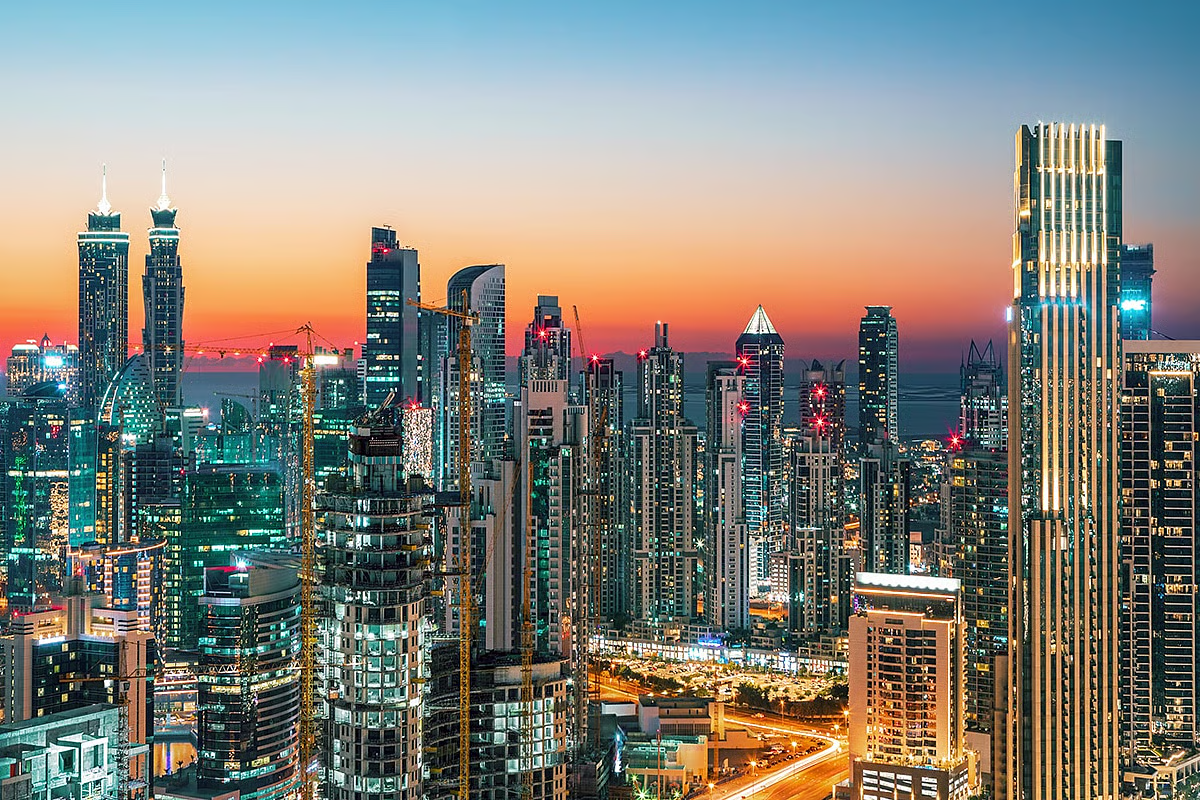

In 2025, Dubai’s real estate market continues to defy global headwinds and is emerging not just as a resilient property hub, but as a market in transition — evolving from speculative frenzy to sustainable strength. Despite rising macroeconomic uncertainty, rising land costs, and a changing investor profile, Dubai’s property landscape is holding up, showing remarkable vibrancy across both off-plan and resale segments. Here, we examine the key forces shaping this new era, the risks ahead, and what it means for investors, developers, and residents alike.
1. Record Transaction Activity, Strong Demand

One of the most striking signs of strength in Dubai’s real estate market is the volume of transactions. In the first quarter of 2025 alone, residential transaction volumes surged by 23% year-on-year, according to CBRE. Off-plan deals were particularly vigorous — a 33% increase — while ready (completed) property sales also saw a healthy rise.
Over the first nine months of 2025, Dubai recorded a 20% jump in off-plan transactions and a 10% rise in resale deals, increasing the number of units sold from 48,000 to 53,000. This shows that buyers remain confident, and many are making long-term or investment commitments, rather than participating just to flip.
2. Supply Tightening Amid Rising Costs
Despite the strong demand, supply dynamics are starting to tighten. New residential launches in 2025 were estimated at around 120,000 units — slightly down (~7.5%) from last year’s 130,000. One of the most significant pressures on supply is sharply rising land costs: land prices in Dubai have reportedly increased by 200–300% since 2020, making it more difficult for new developers to bring projects to fruition.
What this implies is a growing imbalance: demand remains robust, but the ability to scale supply is constrained, particularly for newer and smaller developers. Established players with strong financial backing and brand value are better positioned to navigate this environment.
3. A Market Shift: From Speculation to Stability
Long gone, perhaps, are the days when Dubai’s real estate was primarily driven by speculative investors looking for quick gains. According to Asico, a major brokerage firm, the market is now “pivoting to long-term stability.” The average price per square foot in January 2025 stood at AED 1,484 — down slightly (0.57%) from the prior month, hinting at a possible cooldown or stabilization after the furious growth of recent years.
At the same time, buyer preferences are broadening. Demand is no longer limited to the ultra-luxury segment: more mid-market and affordable housing is gaining traction. According to Asico, two out of five ready homes sold in 2024 were priced at less than AED 1 million. This evolution signals a maturing market — one that is less speculative but more grounded in real demand.
4. Rental Market Remains Healthy
One pillar of strength has been Dubai’s rental market. Rental prices remain firm in many key districts, sustaining investor confidence. According to Deloitte, rental rates increased substantially in 2024 — by as much as 19% in some segments. This helps maintain strong gross rental yields, making buy-to-lease strategies attractive once more.
Furthermore, limited quality office space is driving demand in the commercial sector; in Q1 2025, occupancy rates reached 94%, and office rents rose by more than 20% year-on-year. This undersupply in commercial real estate underscores the integrated strength of Dubai’s property sector, beyond just residential.
5. Land-cost Pressure and Developer Consolidation
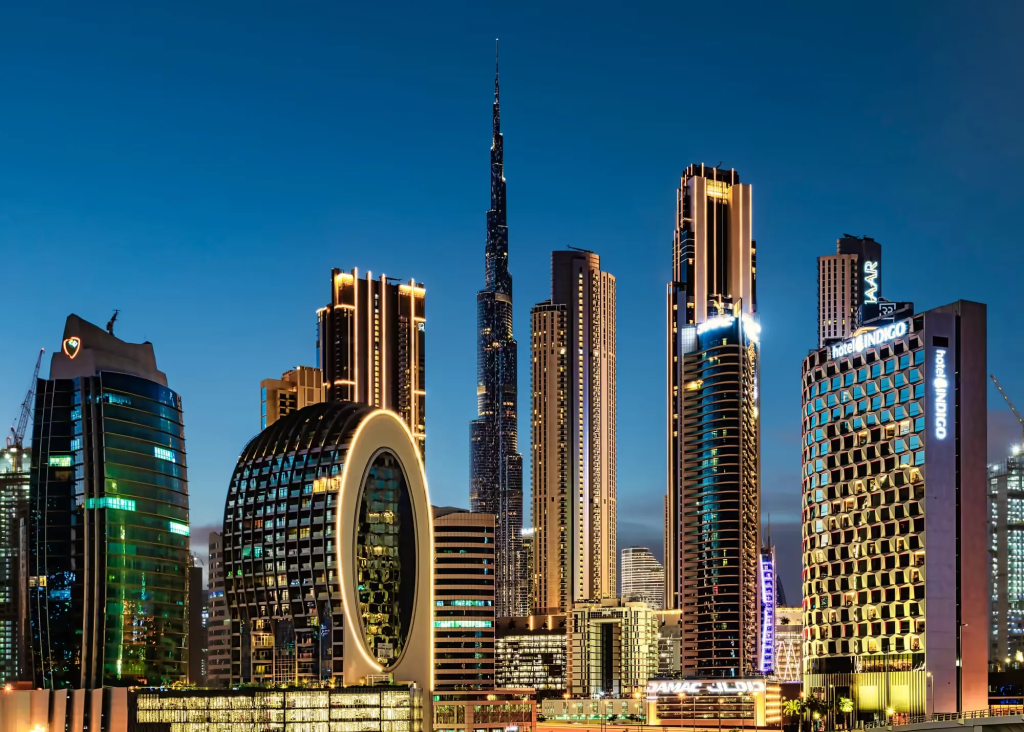
The surge in land costs is reshaping how developers operate. With land becoming prohibitively expensive, smaller, less experienced developers are facing significant challenges — both in securing plots and executing profitable projects. The result: a market increasingly dominated by established players with deep pockets and proven track records.
This is not just speculation. Asico has pointed out that the current phase of the market “favors seasoned developers with strong brand equity. It’s not just about building volume anymore; it’s about quality, execution capability, and reputation.
6. Infrastructure and Location: The New Value Drivers
Where you build now matters more than ever. While some neighborhoods may face oversupply risk, others are emerging as strategic value plays. For instance:
- Jumeirah Village: This area is seeing a burst of supply (27,000 new units), which could potentially lead to price corrections, according to market watchers.
- Jebel Ali: With ~29,000 units planned and infrastructure development still at a nascent stage, this district is viewed as having “significant upside potential.”
According to Firas Al Msaddi, CEO of fäm Properties, the role of infrastructure will be a key determinant of who comes out ahead in this evolving market.
7. Forecasts, Risks, and What Could Go Wrong
Despite the rosy present, not everyone is universally bullish — and some risks warrant attention:
- Fitch’s Warning: The ratings agency has projected a price correction of up to 15% in the second half of 2025 and into 2026, as a possible supply glut kicks in.
- Ramp-up in Deliveries: It is estimated that around 210,000 units could be delivered over 2025–2026 — nearly double the volume of the preceding three years.
- Speculative Risk: Some niche segments or overbuilt districts could face cooling or downward price pressure if end-user demand does not keep pace with supply, as some analysts argue.
Yet, in counterbalance, many market players view this as a healthy correction rather than a collapse. According to Asico, the shift reflects “a maturing market, shifting from speculative buying to strategic, long-term investments.”
8. Why Investors Still Love Dubai
So, with risks on the horizon, why is Dubai still such an attractive place for real estate investment?
- Safe-haven appeal: Deloitte highlights that despite geopolitical turbulence, Dubai remains a top destination for investors seeking security, liquidity, and a globally connected hub.
- Strong rental yields: With yields averaging 6–8% in many well-located areas (especially in off-plan projects), investors still see Dubai as a compelling buy-to-rent play.
- Population and economic growth: Dubai’s population continues growing, and its economic diversification (beyond oil) is supporting steady long-term demand.
- Flexible development models: Off-plan projects, with flexible payment plans, remain attractive. Their pricing (often 10–20% below ready homes) and expected yields make them a go-to for many investors.
- Institutional discipline: With land costs rising, only serious, well-resourced developers are likely to compete, reducing risk and creating a more stable development environment over time.
9. What This Means for Different Stakeholders
- For developers: The era favors those with capital, track record, and brand. Landing prime plots, delivering on time, and building quality will be more important than ever.
- For investors: The window remains open, especially for long-term investors looking for yield. However, discipline and due diligence are crucial — not all districts will perform equally, and supply risk may bite in some corners.
- For end-users/residents: As the market broadens beyond luxury, more mid-market and affordable housing options are appearing, which could make property ownership more achievable for a wider segment.
- For policymakers: Continued monitoring of supply, potentially more regulation or incentives, and infrastructure planning will be key to sustaining the balance between growth and stability.
10. Conclusion: A Market in Evolution, Not Collapse
Dubai’s real estate market in 2025 is not booming in the same way it did in the past, but that doesn’t mean it’s weakening. Instead, it is evolving — maturing into a more balanced, resilient, and sustainable ecosystem. Transaction volumes are strong, demand remains diversified, and despite headwinds, the fundamentals for long-term value are intact.

Leave a Reply