
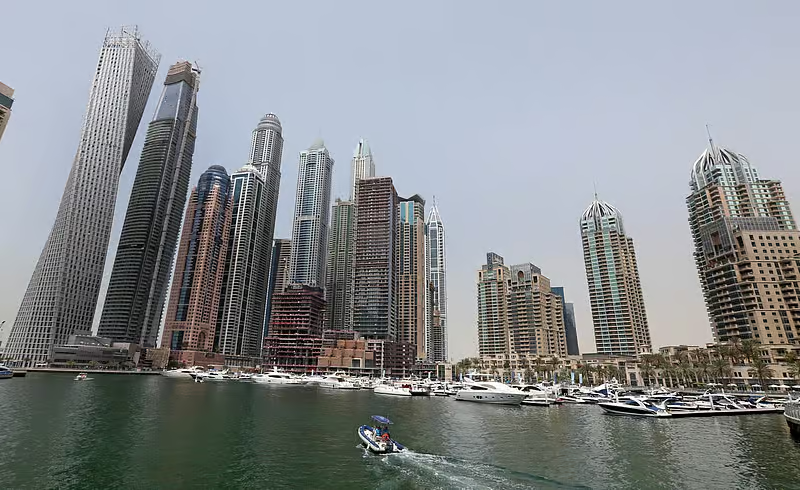

The UAE real estate market is entering a more measured phase as developers increasingly focus on projects that are already well funded, under construction and supported by strong pre-sales. According to Fitch Ratings, the shift comes as residential transactions softened and developers reassess their strategies amid changing market conditions and regional uncertainty.
Rather than aggressively launching a large number of new developments, many UAE homebuilders are prioritising projects that have already reached important funding, construction and sales milestones. This approach allows developers to concentrate their resources on projects with clearer demand and a stronger likelihood of timely completion.
Residential transactions in the UAE declined quarter-on-quarter during the second quarter of 2026, while new project launches also fell significantly. Fitch said developers have responded by prioritising schemes with adequate funding, capital expenditure commitments and pre-sale levels.
Larger developers are considered better positioned to follow this strategy because of their stronger financial resources and ability to develop large master-planned communities in phases. Companies such as Emaar and Majid Al Futtaim can release units gradually, allowing sales absorption to remain aligned with construction and delivery capacity.
Smaller developers, however, may face greater challenges if land prices, construction expenses and financing costs remain elevated. Limited financial flexibility can make it more difficult for smaller companies to maintain the same phased development model or launch multiple projects simultaneously.
Fitch also highlighted the approach of developers such as Omniyat, which has continued to focus on project execution and funding while considering targeted expansion opportunities. This indicates that the current market slowdown does not necessarily mean developers are abandoning growth; instead, they are becoming more selective about where and when to deploy capital.
Another emerging trend is the acceleration of construction for pre-sold standalone properties. Developers are increasingly concentrating on units that already have buyers, helping reduce inventory risk while supporting delivery commitments.
The shift could lead to fewer major project announcements in the short term, but the projects that do move forward may be larger, better funded and more strategically planned. Developers are also expected to release units in phases rather than placing entire developments on the market at once.
Fitch believes large developers are likely to continue favouring major phased developments where demand remains strong, particularly in areas supported by population growth and infrastructure investment such as Dubai South. If buyer demand weakens further, however, developers could become even more selective and delay the launch of mid-sized projects.
For buyers and property investors, this changing strategy highlights the importance of assessing a developer’s financial strength, construction progress, funding position and pre-sales performance before committing to an off-plan property. The UAE property market remains active, but the current environment increasingly rewards well-funded projects and developers with strong execution capabilities.
Overall, the UAE real estate sector appears to be moving from a rapid-launch cycle toward a more disciplined phase focused on delivery, funding and sustainable demand. This could result in a market with fewer headline launches, larger phased developments and a greater emphasis on completing projects that are already commercially viable.

Leave a Reply