
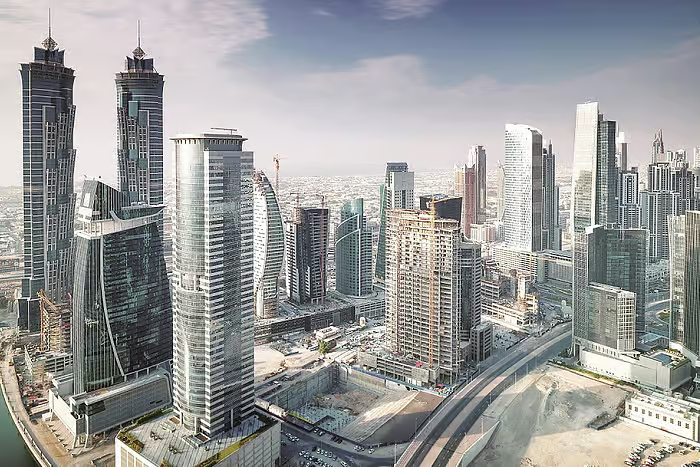

Dubai’s real estate market continues to demonstrate resilience as property prices remain relatively stable despite expectations of a major market correction. According to recent insights from Dubizzle Group, the widespread distressed selling anticipated by some market participants has not materialised, and asking prices have remained firm across most residential communities. However, the growing number of new residential units entering the market could influence property prices in the coming months.
Dubai is expected to receive approximately 56,600 new residential units by the end of 2026. While this additional supply has not yet created significant pressure on advertised prices, its impact may become more visible as new properties enter the market. Bayut’s third-quarter 2026 report indicated that Dubai’s residential property market was stabilising, with relatively limited price movements across popular communities. Its upcoming fourth-quarter report, expected in January, is likely to provide a clearer picture of how increasing supply is affecting market conditions.
During the third quarter, average asking prices per square foot for affordable and mid-range properties generally changed by less than 3%. Luxury and ultra-luxury properties also experienced relatively minor movements, with most segments recording changes within 2%. However, certain premium communities continued to record growth, highlighting the strong demand for selected luxury properties.
Palm Jumeirah remained one of the most popular destinations for ultra-luxury apartments, with average asking prices increasing by 3.4% to AED 3,490 per square foot. Dubai Marina, Downtown Dubai and Dubai Hills Estate also continued attracting buyers interested in luxury residential properties. Meanwhile, Jumeirah Village Circle and Business Bay remained popular among mid-market buyers due to their locations, residential options and lifestyle facilities.
Affordable communities also maintained strong buyer interest. Dubai Silicon Oasis, Dubai Sports City and Dubai South continued attracting people looking for comparatively accessible property options. Average studio prices in Dubai Silicon Oasis stood at approximately AED 556,000, while one-bedroom apartments averaged AED 856,000.
The villa market also showed encouraging demand, particularly in established luxury communities such as Dubai Hills Estate, Arabian Ranches, Al Barari and Palm Jumeirah. DAMAC Lagoons, Arabian Ranches 3 and Al Furjan remained attractive choices in the mid-market segment, while DAMAC Hills 2, Rukan and Dubai South continued to attract buyers searching for more affordable villas.
Rental returns are another important factor supporting investor interest in Dubai’s property market. According to Bayut’s analysis, selected communities recorded estimated gross rental yields of up to 10%. Deira achieved an estimated 10% yield for affordable villas, while Dubai Investments Park recorded 9.5% for affordable apartments. Discovery Gardens and Remraam also delivered attractive estimated apartment yields of 8.5% and 8.4%, respectively. These figures are based on advertised prices and should not be considered guaranteed investment returns.
Overall, Dubai’s property market continues to show stability, supported by demand across affordable, mid-range and luxury segments. Although the expected delivery of new residential properties could create greater competition among sellers and developers, its actual impact on prices will depend on market demand, property locations and the pace of new project completions. Buyers and investors will be closely watching the coming months for a clearer indication of how additional housing supply will shape Dubai’s real estate market.


Leave a Reply